Last reviewed: September 26, 2026
Build one source of truth
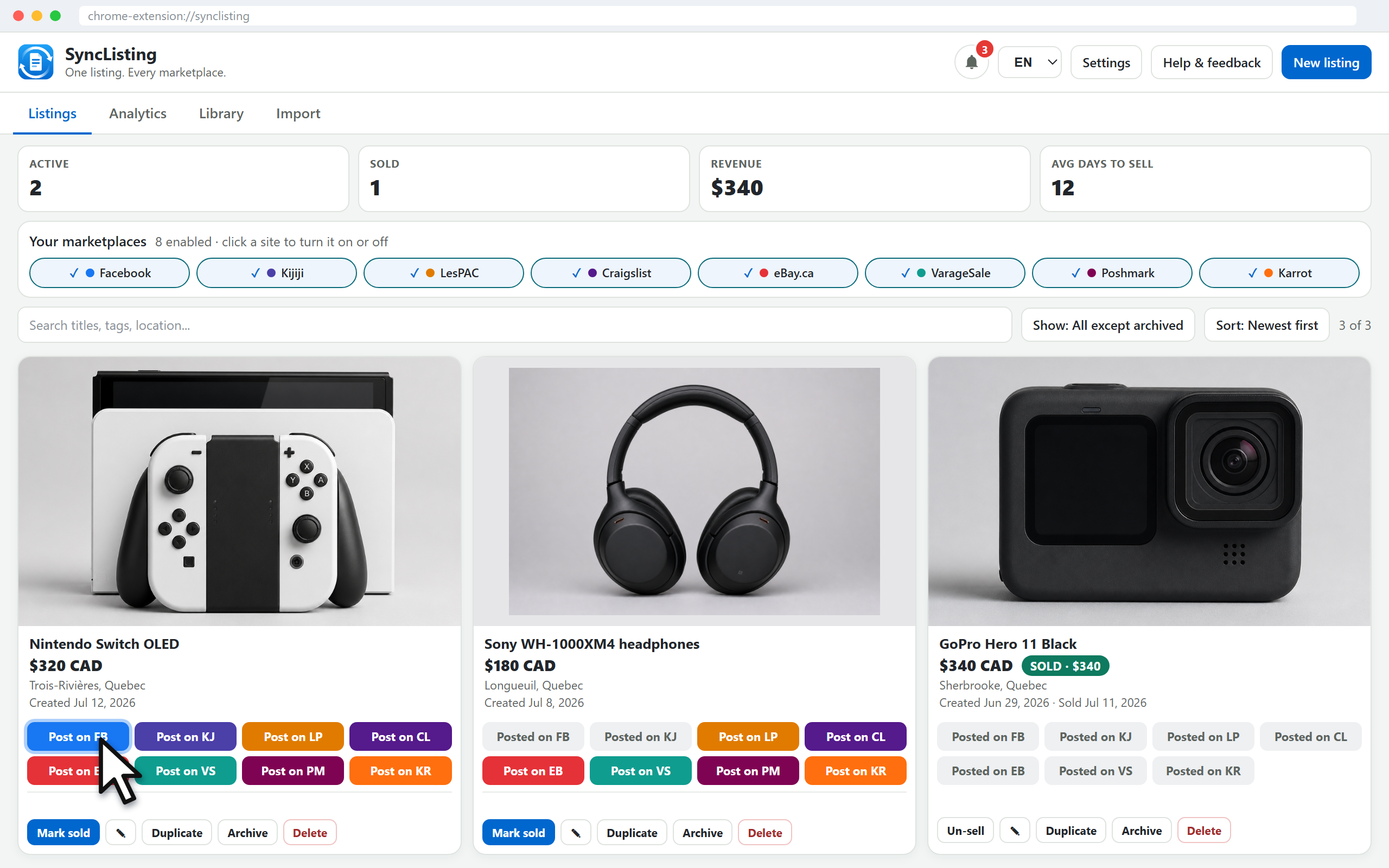
The easiest system is one master listing record per physical item. That record holds the best photos, title, description, cost, target price and a simple list of marketplaces where the item is currently live.
Choose marketplaces by item, not habit
A sofa probably belongs on Facebook Marketplace and Kijiji before it belongs on a shipping-heavy fashion app. A vintage jacket may be worth testing on Poshmark, eBay, Depop and Vinted. Crosslisting software should make selective distribution easier, not encourage you to spray every item everywhere.
| If you are selling… | Start here | Add if it still fits |
|---|---|---|
| Sofa, bike, appliance, “too heavy to ship” | Kijiji + Facebook Marketplace | VarageSale / Karrot where those groups are active |
| Fashion you will ship | Poshmark or eBay | Depop / Vinted after you pick a real locale |
| Branded electronics, collectibles, SKU items | eBay | Kijiji or Marketplace for a local pickup price |
| Quebec local goods | Marketplace + Kijiji + LesPAC | French copy on the classifieds |
Track live status immediately
After each successful post, record that marketplace and, when possible, the live URL. Do not rely on memory. SyncListing’s library stores per-marketplace posting status and live links to reduce that bookkeeping.
Use a sold routine
- Mark the source item sold as soon as payment is real.
- Open every other live marketplace copy (De-list / sold-still-live in SyncListing).
- Remove it or mark it sold on the marketplace yourself.
- Confirm no active copy remains before packaging the item.
Review pricing by channel
Fees, shipping and buyer expectations vary. A local cash-pickup price can reasonably differ from a shipped marketplace price. Crosslisting should reuse the item information, not force identical commercial terms everywhere.
Common questions
Should I list the same item on more than one marketplace?
Often yes, when the item fits more than one audience and you have a reliable way to remove the other copies after a sale.
Do I need crosslisting software?
Not for a handful of listings. It becomes useful when retyping, photo handling and live-status tracking start consuming meaningful time.